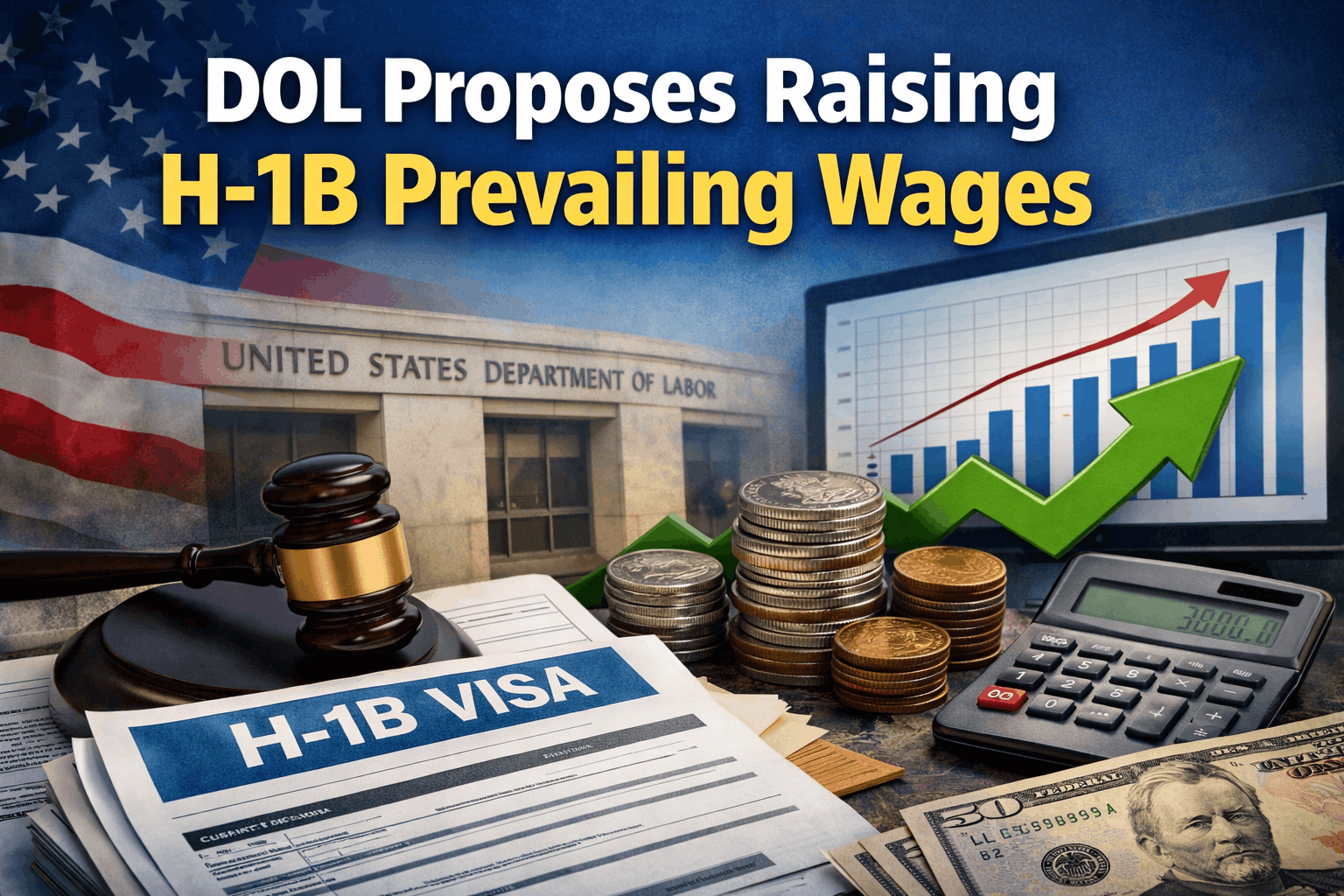
The DOL H-1B prevailing wage increase is a proposed policy change that could raise the minimum salaries required for H-1B workers across all wage levels. If implemented, it would shift how wages are calculated using updated percentile benchmarks, making sponsorship more expensive and potentially limiting entry-level hiring.
This is not a final rule yet. But if approved, it will directly affect how employers file Labor Condition Applications (LCA) and how applicants position themselves in the job market.
Key Takeaways
- The DOL H-1B prevailing wage increase is a proposed rule, not final yet
- Wage levels may shift significantly upward, especially for Level 1
- The system is based on Occupational Employment and Wage Statistics (OEWS) wage data and percentile calculations
- Employers must meet wage requirements at the LCA stage
- Entry-level hiring may decrease due to higher salary thresholds
- The rule will go through a formal public comment and review process
- Higher wages may increase salaries but reduce overall sponsorship volume
This article is for general informational purposes only and does not constitute legal advice. Immigration law is fact-specific, and your situation may be different. Consult a licensed immigration attorney for advice on your case.
What Is the H-1B Prevailing Wage?
The prevailing wage determination is the baseline salary employers must pay foreign workers under the H-1B program. It is calculated using government wage data and depends on:
- Job role
- Geographic location
- Required experience level
This rule exists to protect the U.S. labor market. It ensures that hiring foreign workers does not undercut wages for local employees.
Employers must submit this wage in the Labor Condition Application (LCA) using Form ETA-9035. The Department of Labor reviews this before any H-1B petition moves forward.
The employer must pay whichever is higher:
- The prevailing wage
- The actual wage paid to similar employees
Even a small mismatch between the offered salary and the required wage can lead to delays or rejection at the LCA stage.
How H-1B Wage Levels (Level 1–4) Actually Work
The H-1B system uses four wage levels based on experience and job complexity. These levels are tied to a wage percentile system derived from Occupational Employment Statistics (OES) data.
Wage Level Breakdown
- Level 1 (Entry-Level): Limited experience, routine tasks, close supervision. Typically around the 17th percentile
- Level 2 (Qualified): Some workers who have “attained, either through education or experience, a good understanding of the occupation,” Around the 34th percentile
- Level 3 (Experienced): Advanced skills, decision-making responsibilities. Around the 50th percentile
- Level 4 (Fully Competent / Advanced): Senior-level, leadership or specialized expertise. Around the 67th percentile
These levels directly determine the minimum salary requirement.
What the DOL Is Proposing to Change
The proposed DOL wage rule aims to increase the percentiles used for each wage level. Instead of using lower percentiles, the system would move toward higher benchmarks.
Expected changes include:
- Level 1: 17th → 34th percentile
- Level 2: 34th → 52nd percentile
- Level 3: 50th → 70th percentile
- Level 4: 67th → 88th percentile
This change affects the entire foreign labor prevailing wage framework
The proposal is different from the 2020 interim rule, which was blocked due to procedural issues. Unlike the 2020 interim rule, this proposal follows the standard notice-and-comment process, which some legal observers note may make it harder to challenge procedurally.
Impact on Employers Sponsoring H-1B Workers
The most direct effect is increased employer sponsorship cost.
Key changes employers may face:
- Higher base salaries for all new H-1B hires
- Reduced flexibility in assigning Level 1 wages
- Increased scrutiny on job classification
- Budget adjustments for long-term workforce planning
The LCA filing becomes more sensitive because wage levels must align closely with job duties. A mismatch between responsibilities and wage level increases the risk of compliance issues.
In industries that rely heavily on entry-level talent, hiring strategies may shift toward fewer but more experienced candidates.
Small vs Large Company Impact
- Large companies:
More flexibility to absorb salary increases
Easier to adjust compensation structures - Small companies and startups:
Higher financial pressure
Limited ability to meet increased wage thresholds
Possible reduction in sponsorship activity
This creates an uneven impact across the market.
Impact on H-1B Applicants and Workers
The H-1B salary levels directly influence hiring decisions.
Potential effects include:
- Fewer entry-level job openings
- Stronger preference for experienced candidates
- Higher salary offers for selected applicants
- Increased competition for limited roles
Will Entry-Level Candidates Be Affected?
If Level 1 wages rise closer to mid-level salaries, employers may expect more experience for the same cost. This shifts the hiring pattern toward candidates who can justify higher wage levels through skills or specialisation.
For new graduates or early-career applicants, this makes job selection and skill positioning more important than before.
Key Legal Details That Matter
Several technical points define how this policy works in practice:
1. LCA Approval Is Mandatory
The employer must file the Labor Condition Application before submitting Form I-129 to USCIS.
2. Wage Must Be Accurate at Filing
The salary listed must meet or exceed the prevailing wage at the time of submission. Future adjustments do not fix initial errors.
3. USCIS Reviews Wage Consistency
When reviewing Form I-129, USCIS evaluates whether the wage level matches job complexity and requirements.
4. Job Description Must Align With Wage Level
If a role is filed as Level 1 but includes advanced duties, it creates inconsistency and increases the risk of Requests for Evidence (RFEs).
5. Regulatory Basis
The wage requirement is grounded in the Immigration and Nationality Act (INA) and implemented through 20 CFR Part 655.
These details often determine whether a case moves forward smoothly or faces delays.
Timeline: When Could This Take Effect?
The proposed rule follows a standard federal process:
- Publication in the Federal Register
- Public comment period (usually 30–60 days). Closes May 26, 2026
- Review and revisions
- Final rule issuance
- Implementation date
This process can take several months to over a year, depending on revisions and feedback.
What Employers Should Do Now
Preparation at this stage reduces risk later.
- Review current wage levels used in filings
- Identify roles that may be affected by percentile shifts
- Plan budgets based on higher salary projections
- Evaluate job descriptions for accuracy
- Monitor updates from the Department of Labor
Adjusting early helps avoid last-minute changes when the rule becomes final.
What H-1B Applicants Should Watch For
Applicants should focus on:
- Understanding how wage levels relate to their role
- Evaluating salary offers against prevailing wage data
- Choosing roles that justify higher wage classifications
- Tracking policy updates that may affect filing timelines
Positioning matters more when salary thresholds increase.
Frequently Asked Questions
It is the minimum salary an employer must offer based on job role, location, and experience level, determined using Department of Labor data.
No. It is currently a proposed rule and may change before any final version is implemented.
There are four wage levels (Level 1 to Level 4) based on experience, skills, and job responsibility.
Wages are calculated using Occupational Employment Statistics (OES) data, along with job title, location, and required experience.
It is a required form (ETA-9035) that employers must file with the Department of Labor before submitting an H-1B petition.
Yes. Wages differ depending on the geographic area where the job is located.
Changes typically apply to new filings or updated LCAs, not automatically to existing approvals.
No. The wage level must match the job duties, experience requirements, and complexity of the role.
The LCA may not be approved, and the H-1B petition may not proceed.
It is government-collected salary data used to determine prevailing wages across different occupations and locations.
Wage level is one of several factors reviewed. It must align with the job description and requirements.
The wage listed at the time of filing must meet requirements. Changes later may require updated filings.
It varies. A proposed rule goes through public comments, review, and final publication before implementation.
Not always. It is based on government data, which may differ from private market salary ranges.