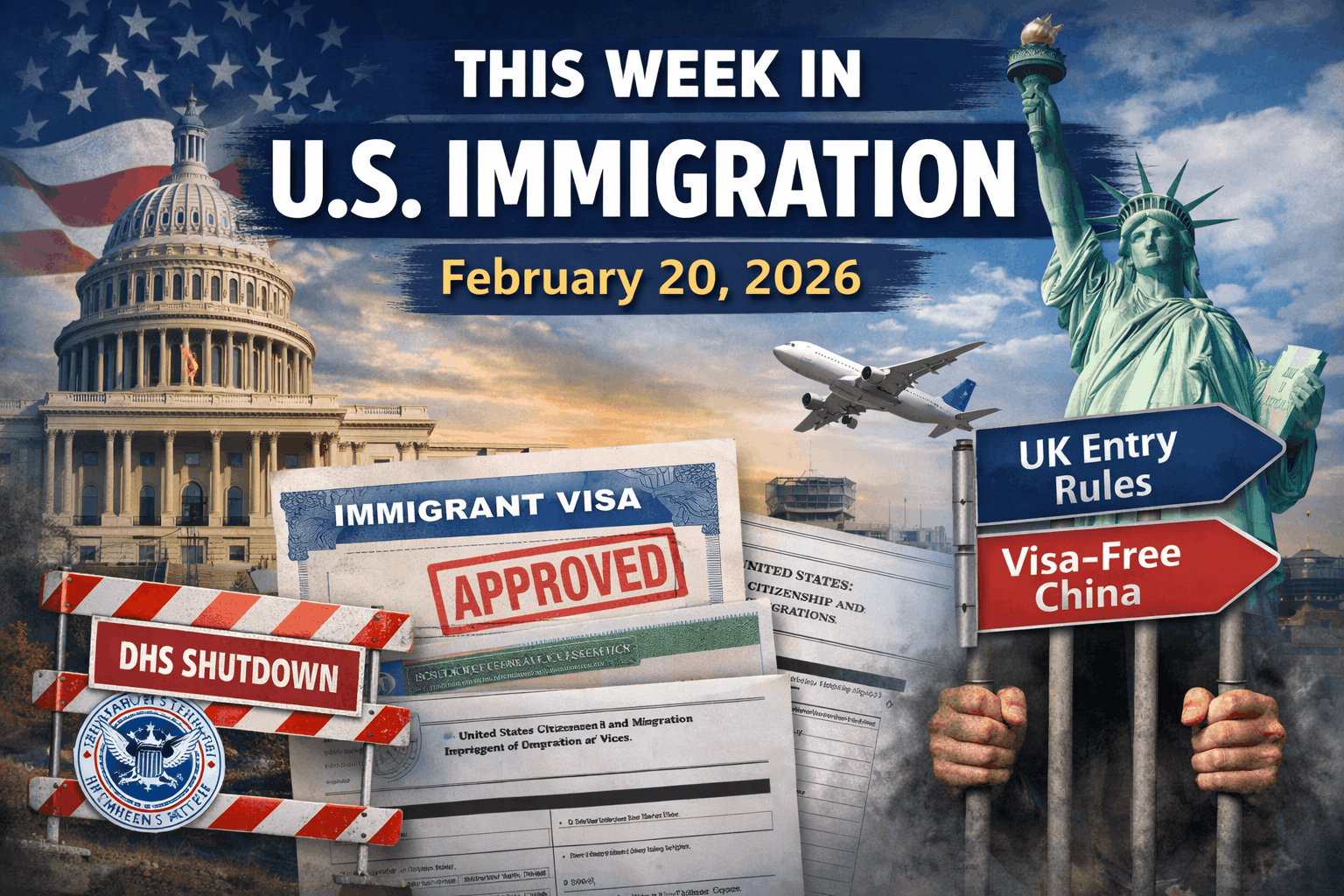
U.S. immigration news this week covers key developments for green card applicants, visa holders, employers, and international students. As of February 20, 2026, a funding dispute at the U.S. Department of Homeland Security has raised concerns about potential processing delays.
Despite this, most services at U.S. Citizenship and Immigration Services remain operational. Officials also clarified confusion around the recent immigrant visa processing pause. Additionally, a new DHS policy may impact refugees applying for permanent residence.
This article provides a complete weekly U.S. immigration update, covering USCIS news, visa changes, refugee policy, and international travel developments.
Key Takeaways
- Most U.S. immigration services remain operational despite the DHS funding dispute.
- USCIS continues processing green cards, work permits, and citizenship applications.
- China is not affected by the recent 75-country immigrant visa processing pause.
- A new internal DHS policy could allow detention of certain refugees who do not apply for permanent residence within one year.
- More Americans are applying for investment and residency visas abroad.
- Global travel rules are changing and may affect U.S. travelers.
- Applicants should continue filing immigration petitions while monitoring official updates.
Is USCIS Processing Immigration Applications During the DHS Shutdown?
USCIS continues to operate because it is mostly funded through application fees rather than government appropriations. This means that essential services such as green card applications, work permits (EAD), naturalization, adjustment of status filings, and family-based petitions are still being processed.
Applicants should expect standard processing timelines for most petitions, though minor administrative delays could occur if the DHS shutdown persists. Employers sponsoring workers and families filing petitions can continue submitting applications without disruption.
USCIS Processing Status During the DHS Shutdown
The U.S. Citizenship and Immigration Services continues to operate because it is funded mostly through application fees rather than government funding.
This means the following services are still moving forward:
- Green card applications
- Work permit applications (EAD)
- Naturalization and citizenship processing
- Adjustment of status filings
- Family-based immigration petitions
Employers sponsoring workers and families filing immigration petitions can continue their applications as planned.
China Is Not Included in the 75-Country Immigrant Visa Processing Pause
The U.S. Department of State clarified that China is not affected by the recent immigrant visa processing pause for 75 countries. Earlier alerts had confused Chinese applicants, but officials confirmed the notice was posted in error and has been removed.
For Chinese applicants, consular processing continues without interruption, and scheduled visa interviews remain unaffected. Families awaiting visa decisions can proceed without concern for delays related to the pause.
Increase in Americans Applying for Investment Visas in Other Countries
A growing number of U.S. citizens are applying for residency and investment visas in other countries. Many are pursuing these programs for business expansion, global mobility, and second residency options.
Countries like New Zealand have made policy changes that lowered investment requirements, relaxed residency rules, and simplified application procedures. These changes have led to a significant increase in applications from Americans and other global investors.
Countries offering investment migration programs are seeing more interest from U.S. citizens who want:
- Business expansion opportunities
- Second residency options
- Global mobility for travel and work
Recent policy changes in some countries lowered investment requirements and made residency easier to obtain, which explains the increase in applications.
New DHS Policy That Could Affect Refugees After One Year in the United States
A new internal memo may change how refugee cases are handled. The policy could allow detention and additional inspection of refugees who do not apply for permanent residence within one year of arriving in the United States.
The policy involves cooperation with U.S. Immigration and Customs Enforcement.
Officials say the goal is to improve screening and prevent immigration fraud. However, refugee support organizations warn that the policy could affect thousands of people who are legally admitted to the country.
Legal challenges are expected as immigration advocates review the guidance.
Other Immigration and Travel Updates from Around the World
Immigration policy changes outside the United States can also affect U.S. travelers and visa holders.
Governments are updating travel rules, passport requirements, and visa policies as global mobility continues to evolve. These changes can impact students, tourists, and business travelers who frequently move between countries.
What These Immigration Updates Mean for Applicants and Employers
For many people, the biggest concern right now is whether immigration processing will slow down.
Here is what applicants should keep in mind:
- Applicants should continue filing immigration petitions because USCIS is still processing cases.
- Employers sponsoring foreign workers should proceed with visa filings and labor documentation.
- International students and travelers should carry valid immigration documents while travelling within the United States.
Staying updated with official announcements is important as policies can change quickly.
What Immigration Changes to Watch Next Week in the United States
Several developments could shape immigration policy in the coming weeks:
- Progress on DHS funding negotiations
- Updates on visa processing policies
- Possible court challenges to new immigration rules
- Additional announcements from immigration agencies
These updates may affect visa processing timelines and immigration enforcement priorities.
Frequently Asked Questions
1.Is USCIS still processing immigration applications during the DHS shutdown?
Yes. USCIS continues to operate because it is mainly funded through application fees. Most immigration services, such as green card processing, work permits, and citizenship applications, are still active.
2.Will the DHS shutdown delay green card processing?
Right now, core processing continues normally. However, if the funding issue lasts longer, some administrative steps or coordination between agencies could slow down.
3.Is China included in the immigrant visa processing pause?
No. The U.S. government confirmed that China is not part of the visa pause affecting certain countries. Immigrant visa processing for Chinese applicants continues.
4.What is the new policy affecting refugees after one year?
A new government memo may allow authorities to detain and inspect refugees who have not applied for permanent residence within one year of arrival.
5.Should employers continue filing immigration petitions?
Yes. Employers should continue submitting visa petitions and immigration filings because the main processing systems remain operational.
6.Why are more Americans applying for residency abroad?
Many Americans are exploring investment visas and residency programs due to business opportunities, travel flexibility, and global mobility options.
7.What should visa applicants do right now?
Applicants should keep their documents ready, monitor official announcements, and continue filing applications as planned while policies evolve.