Quick Summary:
Your F-1 journey can be derailed in seconds, during the visa interview or even after you arrive in the U.S. This guide uncovers two real scenarios that shocked thousands: a 10-second visa rejection and a student placed at deportation risk over one missed email. Here’s what really went wrong, and how you can avoid the same fate.
Understanding Sudden F-1 Visa Failure Points
F-1 visa failures most often happen because of weak interview answers, lack of financial clarity, or misunderstandings after entering the U.S. The myths students follow, not the truth — frequently trigger both 214(b) visa denial and post-arrival status violations.
Many students think the process ends the moment their visa is approved. But for thousands, the riskiest moments occur before the interview and after arriving in the U.S. From the 10-second rejection phenomenon at Mumbai U.S. Consulate to the silent deportation risk created by one missed SEVP email, these stories reveal the reality behind the growing number of F-1 horror stories.
VisaPro has supported thousands of students through admissions, interviews, SEVIS issues, and reinstatements, and this guide pulls together the lessons every student must know.
1. The 10-Second Rejection Phenomenon: When One Sentence Triggers a 214(b) Denial
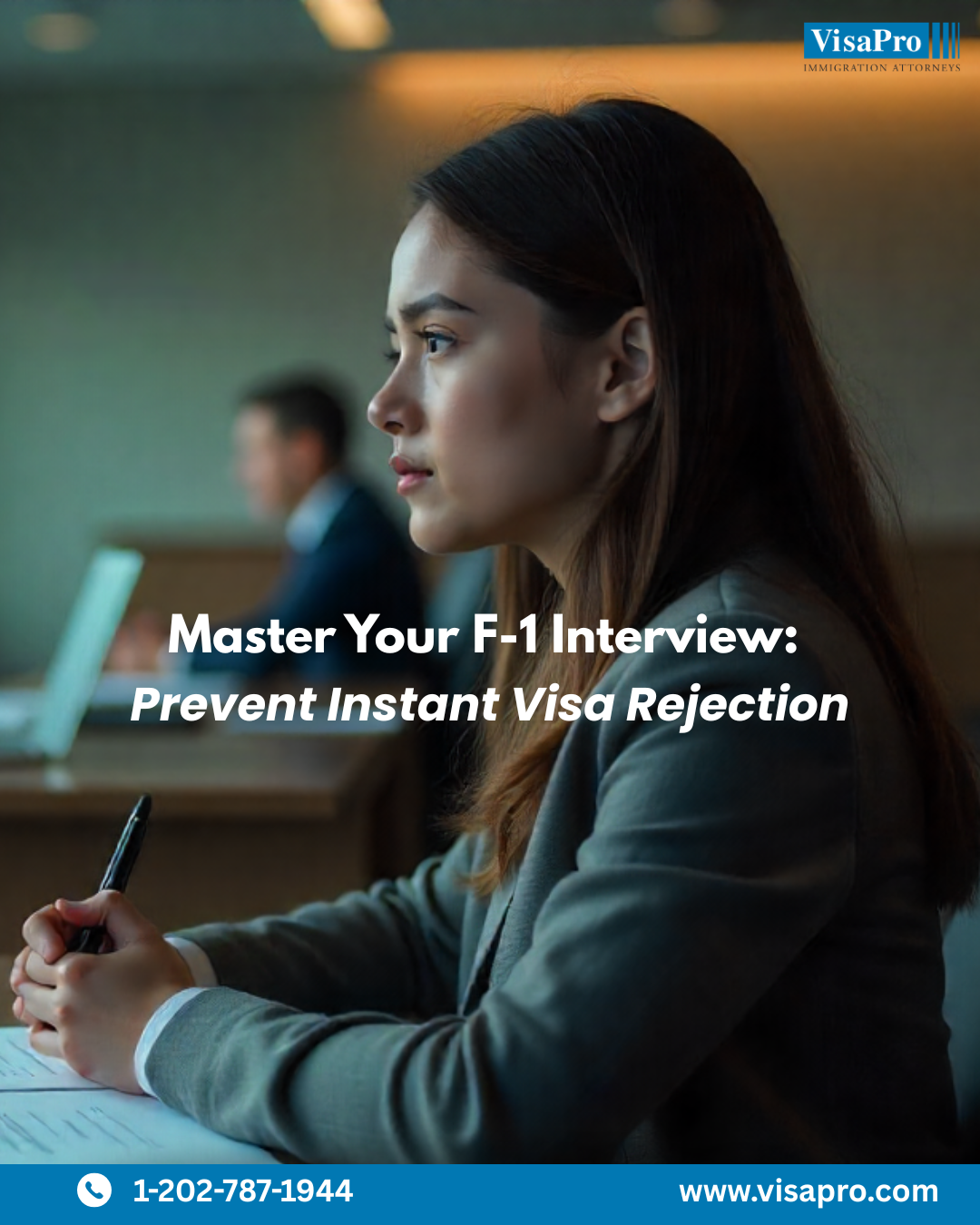
The 10-second rejection phenomenon refers to visa denials that occur almost immediately during the interview, sometimes before an applicant finishes their first response. Consular officers are trained to identify scripted, memorized, or fraudulent answers within moments of hearing them. When specific phrases or justifications appear that match known patterns of visa fraud or overly rehearsed answers, officers may terminate the interview and issue a denial on the spot.
Your opening lines can trigger immediate visa interview rejection, even before you finish speaking.
Understanding this phenomenon is crucial for F-1 visa applicants. The us student visa rejection rate has fluctuated significantly in recent years, with certain consulates reporting denial rates exceeding 30% for first-time student visa applicants. Knowing what triggers immediate suspicion allows you to prepare responses that demonstrate genuine intent while avoiding phrases that have been compromised by fraudulent use.
| Red Flag Response Type | Why It Triggers Rejection | What Officers Think |
|---|---|---|
| “I chose this university because of Professor [Name]” | Most commonly coached answer used by visa fraud operations | “This applicant used a consultant and memorized scripted answers” |
| “This is my dream school” without specific details | Vague, emotional claim without substantive reasoning | “They don’t actually know why they chose this school” |
| Mentioning only rankings or prestige | Suggests lack of genuine research into program fit | “They just want any U.S. visa, not this specific education” |
| Unknown funding source | No real research or preparation to study in the U.S. | “Academic interests may not be driving intent.” |
What Happened at the Mumbai Consulate
A student on Reddit shared how their F-1 visa was rejected in 10 seconds- mid-sentence- while explaining why they chose their university.
The moment they said,
“I selected this school because of Professor ___,”
the officer’s expression changed, and the visa was denied.
A former visa officer later confirmed the problem:
This line is an old ‘coached answer’ widely used by applicants trained by visa consultancies 10–15 years ago. Officers view it as a red flag.
Why This Answer Is Dangerous (Even If It’s True)
Visa officers assume:
- Students rarely select universities, especially at the undergraduate level, based on a single professor
- Many who give this answer cannot name a course or research area
- It is linked to past fraudulent student visas
- It indicates “lack of genuine academic intent,” triggering 214(b)
Case Scenario:
Scenario 1: The Scripted Scholar
A student says they chose the school for a professor but cannot answer:
- What course does the professor teach?
- Is the professor still at the university?
- What research is that professor known for?
Within seconds, visa interview rejection.
Scenario 2: The Ranking Confusion
Another student says they chose the school because it’s “ranked high,” but can’t explain:
- Which ranking?
- What is the program’s specialization?
Also, a fast 214(b) denial.
Scenario 3: The Financial Mismatch
A student chooses an expensive university but can’t explain how their education will be funded.
Result: student visa application denied in under a minute.
How to Avoid A 10-Second Rejection
Checklist of Safe, Strong Answers:
- Mention program fit, not professors
- Show clarity in academics and finances
- Keep answers short, crisp, factual
- Do not over-explain, officers do not have time
- Practice 20–30 real F-1 visa interview questions
Your Next Step
If you’re worried about 214(b) visa denial or need mock interview guidance, VisaPro can help you build strong, authentic answers that avoid scripted traps.
2. How the Wrong Interview Strategy Can Destroy a Strong Profile
Even qualified students fail because they follow outdated coaching, memorize wrong answers, or underestimate the officer’s training.
The officer makes a decision in seconds based on your first few responses and your overall credibility.
Why Students With Strong Academics Still Get Denied
Officers do not evaluate you based on:
- GPA
- IELTS/TOEFL
- GRE/GMAT
- SOP
- Scholarships
They only evaluate:
- Your intent
- Your financial capacity
- Your ties outside the U.S.
Case Scenario:
Scenario 1: The High-Scorer Who Still Got Rejected
A student with a GRE Score of 330, full funding, and multiple acceptances walked in confidently.
But their first answer sounded memorized.
The officer lost trust instantly.
Scenario 2: The Confused Switcher
A student switching fields (e.g., BA → MS in CS) didn’t explain why clearly.
Officer assumed the goal was U.S. job prospects → 214(b) denial.
Scenario 3: The “Best University” Trap
A student said they chose their university because it’s “the best.”
This is another outdated coaching phrase the consulates recognize.
How to Pass F-1 Visa Interview Without Sounding Scripted
- Speak naturally
- Answer as if explaining to a mentor, not an examiner
- Avoid buzzwords
- Give 10–12 second responses
- Never answer like a template from YouTube
VisaPro’s attorneys help students craft personalized, legally accurate interview answers that maximize approval.

3. Understanding 214(b) Visa Denial: Why Officers Reject Even Genuine Students
214(b) visa denial occurs when the officer is not convinced you are a genuine student with strong ties and clear academic intent.
Most 214(b) decisions come from communication problems, not academic weakness.
Common Triggers for Visa Interview Rejection
- Scripted answers
- Financial uncertainty
- Switching fields without explanation
- Poor eye contact or nervous delivery
- Contradictions between DS-160 and interview answers
Officers want to hear multiple, interconnected reasons for your university choice and desire to study in the U.S. A strong response discusses program-specific curriculum elements, particular courses or specializations unavailable in your home country, career services and internship networks relevant to your field, geographic location advantages for your specific industry, and how the program’s structure aligns with your learning style and career timeline. This multifaceted explanation sounds like genuine research rather than memorized talking points.
| Interview Question | Red Flag Answer | Credible Answer |
|---|---|---|
| “Why this university?” | “Because Professor Smith teaches there” | “The program offers a unique concentration in [specific field] with hands-on [specific opportunity]. I compared it with [other schools] and this curriculum structure best fits my background in [area] and career goal of [specific role].” |
| “Why study in the U.S.?” | “American education is the best” | “This specific program offers [concrete element] not available in my country. I researched programs in [home country, UK, Canada] but only U.S. institutions offer this particular combination of [specific features].” |
| “What will you do after graduation?” | “I’ll come back and get a job” | “I’ve researched the [specific industry] market in [home city]. Companies like [actual company names] are actively hiring for [specific role]. My father’s connection with [industry] has confirmed there’s demand for professionals with [specific U.S. training].” |
| “Why not study in your home country?” | “Better quality education in U.S.” | “[Specific program element] isn’t offered at universities in my country. I need [particular skill/certification/training] for [specific career path], which requires U.S.-based education.” |
| “How will you fund your education?” | “My parents will pay” | “My father has worked as [profession] for 20 years with annual income of [amount]. He’s saved specifically for my education, here are 18 months of bank statements showing consistent balances. We’ve calculated all costs at $[amount] annually and have funds to cover [X] years.” |
Why the U.S. Student Visa Rejection Rate Is Rising
Consulates in India, Pakistan, Bangladesh, and Africa reported higher us student visa rejection rate due to:
- Over-coaching
- Fraudulent consultancies
- Misuse of F-1 as a path to employment
Case Scenario:
Scenario 1: The Parent Funding Gap
Student says parents earn $14,000/year but tuition is $55,000/year.
Officer assumes the finances are unrealistic.
Scenario 2: The Gap Year Problem
Unexplained gap of 3 years → suspicion of non-immigrant intent.
Scenario 3: The Contradictory DS-160
Student says they will return home, but the DS-160 lists U.S. cousins as points of contact.
Officer sees conflict → denial.
How VisaPro Helps Students Reduce Denial Risk
- Identify weak points in your DS-160
- Prepare tailored interview answers
- Ensure financial proofs match your story
- Provide attorney-level evaluation of your academic explanation

4. F-1 Visa Interview Tips That Actually Work in 2025
The best f-1 visa interview tips focus on clarity, brevity, and credibility. Officers prefer short, confident answers that show genuine intent, not rehearsed scripts.
Strong communication matters more than perfect English or high test scores.
Follow This Proven Interview Strategy
- Answer in 8–12 seconds
- Maintain steady eye contact
- Stick to the question asked
- Do not volunteer unnecessary details
- Avoid coaching-style statements
- Keep a calm tone
Case Scenario
Scenario 1: The Over-Talker
Student talks for 2 minutes continuously.
Officer becomes suspicious.
Scenario 2: The One-Word Responder
Student answers with “yes/no” only.
Officer assumes poor communication skills.
Checklist of Safe, Smart Phrases
- “My program is focused on…”
- “My career plan is to…”
- “My funding source is…”
- “I chose this university because of the program structure…”
5. What To Do If Your Student Visa Application Is Denied
After student visa application denied, your next steps depend on why the officer denied you. A 214(b) denial requires strengthening your ties, clarifying finances, and correcting ineffective interview responses before reapplying.
This denial isn’t permanent, but it indicates the officer wasn’t convinced by your ties to your home country or found inconsistencies in your application. You can reapply immediately, but simply resubmitting the same application will likely result in another denial. You need to address the underlying concerns that led to the initial rejection.
| 214(b) Denial Factors | What Went Wrong | How to Strengthen Reapplication |
|---|---|---|
| Weak Financial Proof | Insufficient funds; suspicious deposits; sponsor income doesn’t justify expenses | Provide longer bank statement history (12-18 months); add co-sponsor if needed; show tax returns proving income source |
| Insufficient Home Ties | Young, unmarried applicant; no property; family members abroad; no clear employment prospects | Document property ownership; get job offers conditional on degree completion; show business obligations requiring return |
| Unconvincing Career Plans | Vague descriptions; unrealistic expectations; degree doesn’t match stated goals | Research thoroughly; name specific companies and roles; explain industry demand with data |
| Poor Interview Performance | Scripted answers; couldn’t answer basic questions; contradicted written application | Prepare naturally; know your program details; ensure consistency across all documents |
| Program/University Mismatch | Overqualified or underqualified for chosen program; school has reputation issues | Consider changing to more appropriate institution; explain unique program elements clearly |
| Academic Gaps or Inconsistencies | Unexplained gaps; field changes without logic; poor previous grades | Provide honest context; show improvement; connect your educational journey logically |
After a 214(b) denial, resist the urge to immediately book another appointment out of frustration or panic. Take time to objectively assess what went wrong. If possible, try to understand the officer’s concerns from the brief interaction. Were they focused on financial questions? Did they seem skeptical about your university choice? Did they question your intent to return? Sometimes the officer provides hints about their concerns during the denial conversation, pay close attention to any guidance offered.
Case Scenario
Scenario 1: The Quick Re-Applicant
Student reapplies after 3 days with identical answers.
Second rejection is almost guaranteed.
Scenario 2: The Financial Fix
Student adds a legitimate co-sponsor and brings bank statements.
Approval on second attempt.
Scenario 3: The Program Change
Student switches to a more suitable program.
Officer sees academic clarity → approval.
How VisaPro Can Help After a Denial
- Analyze your interview mistakes
- Strengthen your narrative for re-application
- Fix financial documentation
- Guide your DS-160 revision
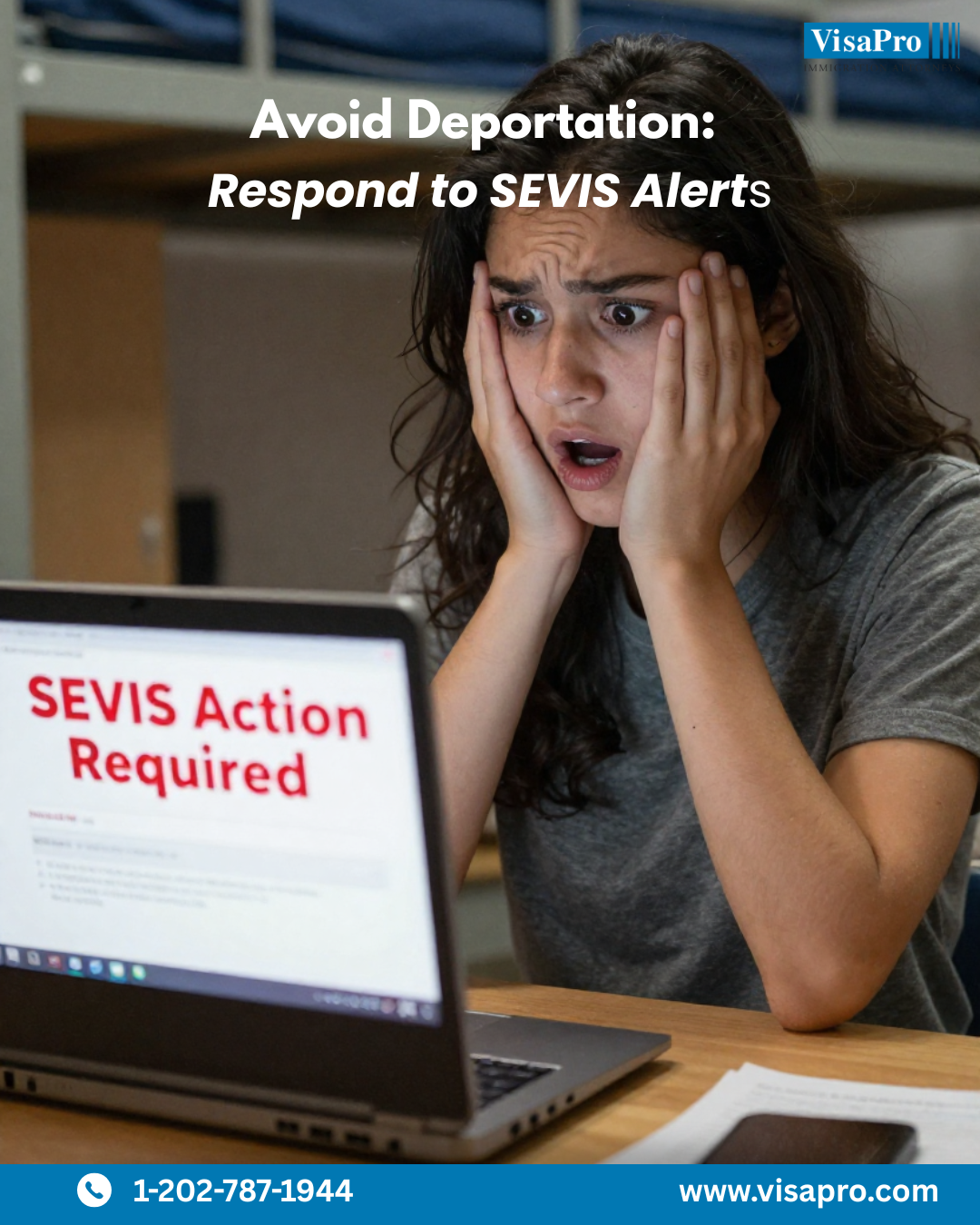
6. One Missed Email = Deportation Risk: The Hidden Post-Arrival Trap
After arriving in the U.S., ignoring emails from your university or SEVIS can put you at risk of losing F-1 status. Missing even one compliance email can lead to termination of your SEVIS record.
Many students are shocked to learn their deportation risk began with something as small as not checking their inbox.
What Happened in a Real Case
A student arrived in the U.S., attended orientation, and started classes.
Then they ignored an email about:
- Completing “Document Check-In”
- Uploading their I-94
- Updating U.S. address
- Completing the Enrollment Confirmation Form
Within 21 days, their SEVIS record was terminated for “No Show.”
They had no idea until Border Patrol stopped them while traveling domestically.
Why This Happens
Universities must comply with DHS timelines.
One missed email → non-compliance → termination.
Case Scenario:
Scenario 1: The “Wrong Email Inbox” Mistake
Students often use their personal email but forget that universities send all official communication to the campus email.
Missing those → immediate violation.
Scenario 2: The I-94 Upload Failure
Many students do not upload their I-94 in time because the system often auto-downloads incorrectly.
One missing upload = SEVIS issue.
Scenario 3: CPT/OPT Reporting Issues
Students on CPT or OPT change jobs but forget to report it.
5–10 days later → SEVIS termination → unlawful presence.
Protect Yourself With a Post-Arrival Compliance Checklist
- Activate university email on Day 1
- Check inbox, spam, and portals daily
- Complete document check-in within 48 hours
- Update address in SEVIS within 10 days
- Report CPT/OPT changes immediately
Your Next Step
If you missed deadlines or received a termination notice, VisaPro can evaluate reinstatement or re-entry options.
7. The Post-Arrival Reality: How Status Violations Begin Silently
Most F-1 students lose status not because of deliberate violations but because of misunderstandings, miscommunication, or overlooking university policies.
The smallest mistake, even one missed email, can create an unlawful presence issue.
Common Causes of Post-Arrival Status Violations
- Missing “Mandatory Check-In” deadlines
- Dropping below full-time or in-person enrollment
- Not reporting address changes
- Unauthorized remote attendance
- Working off-campus without authorization
- CPT/OPT reporting errors
Case Scenario:
Scenario 1: The Enrollment Credit Mistake
Student drops a course mid-semester, falling below full-time.
University terminates SEVIS → unlawful status begins.
Scenario 2: The Unauthorized Part-Time CPT Job
Student works 2 days/week extra for a professor (unpaid).
Even unpaid work = unauthorized employment = violation.
Scenario 3: The Address Change Delay
Moving apartments without updating SEVIS within 10 days → violation.
How to Avoid These Violations
- Maintain full-time enrollment
- Avoid all unauthorized work
- Confirm every CPT/OPT job with DSO
- Check university portal daily
- Keep copies of all documents
VisaPro Can Help With
- SEVIS reinstatement
- Travel and re-entry strategy
- Compliance support
- Complex CPT/OPT issues

Frequently Asked Questions (FAQ)
F-1 rejections usually happen due to weak academic intent, unclear or insufficient finances, scripted interview answers, or poor articulation. Visa officers look for authenticity, clarity, and strong ties outside the U.S.
The U.S. student visa rejection rate has increased due to over-coaching, fraudulent or aggressive consultancies, and applicants presenting F-1 as a pathway to U.S. employment rather than education. Officers now apply stricter 214(b) scrutiny.
Keep your answers short, natural, and confident. Avoid memorized or coaching-style responses. Clearly explain your program choice, funding sources, and post-study career plans in 8–12 second answers.
If denied under 214(b), reassess your academic intent, strengthen your financial documentation, and correct weak explanations in your DS-160. Reapply only after fixing the identified gaps.
Prepare answers to 20–30 common questions, avoid overly polished responses, maintain steady eye contact, and stay calm. Officers prefer concise, honest answers that demonstrate genuine academic intent.
Missing mandatory emails related to SEVIS check-ins, I-94 uploads, or address updates can result in SEVIS termination. Once terminated, you risk unlawful presence and may need reinstatement or re-entry guidance.
Most F-1 interview questions follow the same themes—university choice, academics, finances, and future plans. However, officers tailor follow-up questions based on your DS-160 and interview responses.
While exact numbers vary by country, consulates in India, Pakistan, Nepal, and Africa reported higher denial rates due to concerns about intent, finances, and over-prepared coaching patterns.
Reviewed by Immigration Attorney
Ancy S. Varghese is a U.S. immigration attorney with 19 years of business immigration experience at VisaPro Immigration Law Firm. She has extensive experience handling F-1 student visa matters, including visa interview preparation, §214(b) denials, SEVIS terminations, reinstatement strategies, CPT/OPT compliance, and post-arrival status violations. She regularly evaluates high-risk student profiles and counsels applicants on avoiding common interview and compliance pitfalls that can jeopardize lawful status.
Ready to Protect Your F-1 Journey With Confidence?
Your U.S. education dreams shouldn’t fall apart over a 10-second interview mistake or one missed SEVP email. At VisaPro, our experienced immigration attorneys specialize in complex F-1 cases, including 214(b) denials, SEVIS terminations, reinstatements, and high-risk interview profiles, and can help you build the strongest possible path forward.
Schedule your consultation today to receive personalized guidance on your F-1 eligibility, interview strategy, financial documentation, SEVIS compliance, and reinstatement options. We’ll help you avoid hidden pitfalls and strengthen your case with attorney-level precision.
Contact VisaPro now to speak with an F-1 visa specialist who understands the unique challenges students face, from interview pressure to post-arrival compliance. Let us help you safeguard your status, protect your future, and move forward with clarity and confidence.
What VisaPro Customers Are Saying
The US [B-1] Visa has always been a tough ride, and being denied a few times it makes it even worse. But thanks to VisaPro and their meticulous processing I was granted a Visa. I would like to thank you and all the people involved in making this a success. I would like to recommend VisaPro to all those who seek peace of mind and hassle free Visa processing.”
 Manas Bhat, Director Operations, First Houston Mortgage India