When an H-1B worker is laid off or terminated, two key concepts come into play: the 60 day grace period and severance pay. Many workers mistakenly believe that receiving severance extends their authorized stay. Understanding the interaction between these two elements is crucial for making informed decisions about your immigration status after employment ends.
Key Takeaways
- The H-1B grace period is 60 days from the last day of employment, not the last day of severance
- Severance pay does not extend your authorized period of stay in the United States
- You must take action transfer, change status, or depart within the 60 day window
- USCIS regulations make clear that unlawful presence begins after the grace period ends
- Negotiating severance can provide financial runway without affecting immigration timelines
- Reviewing your termination date vs. severance end date is essential to status planning
- An immigration attorney can help you use the grace period strategically for your next steps
- Acting early within the grace period gives you the most options for maintaining lawful status
Understanding Why Severance Pay Does Not Protect Your H-1B Status
Severance pay has no legal effect on your H-1B status. For immigration purposes, your H-1B termination status begins on the last day of actual employment, not the last paycheck date. The H-1B layoff grace period starts immediately after your official last date of employment, even if severance continues or is paid out incrementally.
The Core Legal Reality Most Workers Are Never Told
In U.S. immigration law, employment is defined by active employment under the approved petition. Once that work ends, whether due to layoff, termination, or role elimination, your H-1B status stops being valid. Payroll alone does not equal employment.
Many employers unintentionally contribute to confusion. HR may say, “You’ll still be on payroll for three months,” without clarifying that immigration status is governed by USCIS rules, not company benefits policies.
Why This Confusion Is So Common
Severance pay exists in employment law, not immigration law. USCIS does not recognize severance as ongoing employment because severance pay is specifically pay and/or benefits given to an individual when there is a layoff or termination of employment. Severance pay is not provided in exchange for work.
Yet thousands of foreign workers mistakenly assume that severance pay visa status protection exists. It does not.
Real-Life Snapshot
Arjun, a software engineer in California, was laid off on March 1 but received severance through May 31. He assumed his H-1B status lasted until May. In reality, his H-1B 60 day grace period ended on April 30, while he was still receiving checks from the company.
VisaPro Tip: Always confirm your last day of employment, not your severance end date. That date determines every immigration deadline that follows.
How the H-1B 60-Day Grace Period Actually Works After a Layoff
The H-1B 60 day grace period begins the day after your last official day of employment and does not pause, extend, or reset due to severance pay. If no qualifying action is taken within 60 days, you fall out of status.
What the Grace Period Allows, and What It Does Not
During the grace period, you may:
- Remain legally in the U.S.
- Search for a new employer
- File a change of status or transfer
You may not:
- Work for pay without an approved petition
- Assume your status is safe because you are “on payroll”
Timeline Breakdown (Simple Flow)
| Event | Immigration Impact |
|---|---|
| Last date of employment | H-1B employment ends |
| Day 1 after last date of employment | Grace period starts |
| Day 60 | Final day to file action |
| Day 61 | Out of status |
Why Month 2 Is the Most Dangerous Period
Month 1 often triggers panic and urgency. Month 2 creates false comfort. Many workers think, “I still have time,” while unknowingly approaching a hard legal deadline that cannot be fixed retroactively.
VisaPro Tip: Treat Day 1 of termination as a countdown start, not a buffer. The earlier you act, the more legal options remain available.

The Month-by-Month Trap: How Professionals Accidentally Miss the Deadline
Most missed deadlines occur because workers misinterpret severance pay as continued employment and H-1B status and delay action until it is too late, often discovering the truth after Day 60 has already passed.
Month 1: Shock and Assumptions
You are laid off but reassured by HR. Paychecks continue. Stress feels manageable. Immigration urgency feels low.
Month 2: Job Searching Without Legal Urgency
You begin applying for roles, assuming transfers can be filed “later.” You believe the H-1B grace period severance pay situation protects you. It does not.
Month 3: The Wake-Up Call
An attorney, or worse, a recruiter, mentions that severance does not matter. You count days and realize it is Day 75.
A Short Self-Check Quiz
Ask yourself honestly:
- Do you know about your last day of employment?
- Has an H-1B transfer or status filing been submitted?
- Are you assuming payroll equals status?
If any answer is unclear, your risk level is high.


What Happens If You Discover the Mistake After Day 60
Once the grace period expires, you are out of status. This can affect future visa approvals, change-of-status filings, and even reentry to the U.S., depending on timing and actions taken.
Immediate Consequences
- Loss of lawful nonimmigrant status
- Ineligibility for in-country H-1B transfer
- Salvage Options That May Still Exist
Depending on timing, some individuals may:
- Exit the U.S. and reenter with a new petition
- Seek nunc pro tunc relief in limited circumstances
- Change status through family-based or school options
Each scenario is fact-specific and time-sensitive.
VisaPro Tip: Do not assume “it’s already too late.” Legal options may still exist, but delays reduce them rapidly.
Correcting the Myth: Severance Pay vs. Immigration Status
Severance pay is a post-termination benefit. It does not preserve H-1B employment, pause the grace period, or protect against status violations.
Common Myths, Debunked
“I’m still getting paychecks, so I’m still employed.”
False under immigration law.
“HR said I’m active until severance ends.”
HR definitions do not control USCIS rules.
“USCIS will understand.”
USCIS applies regulations, not sympathy.
Why USCIS Takes a Strict View
H-1B status is employer-specific. Once the employer-employee relationship ends, the petition no longer supports status, regardless of financial arrangements.
How to Protect Yourself Immediately After an H-1B Layoff
The safest approach is to assume your grace period starts immediately and consult an immigration attorney within the first two weeks after termination.
Immediate Action Checklist
- Confirm last day of actual work
- Calculate Day 60 precisely
- Explore H-1B transfer options early
- Evaluate backup status changes
- Document all communications
- Strategic Timing Matters
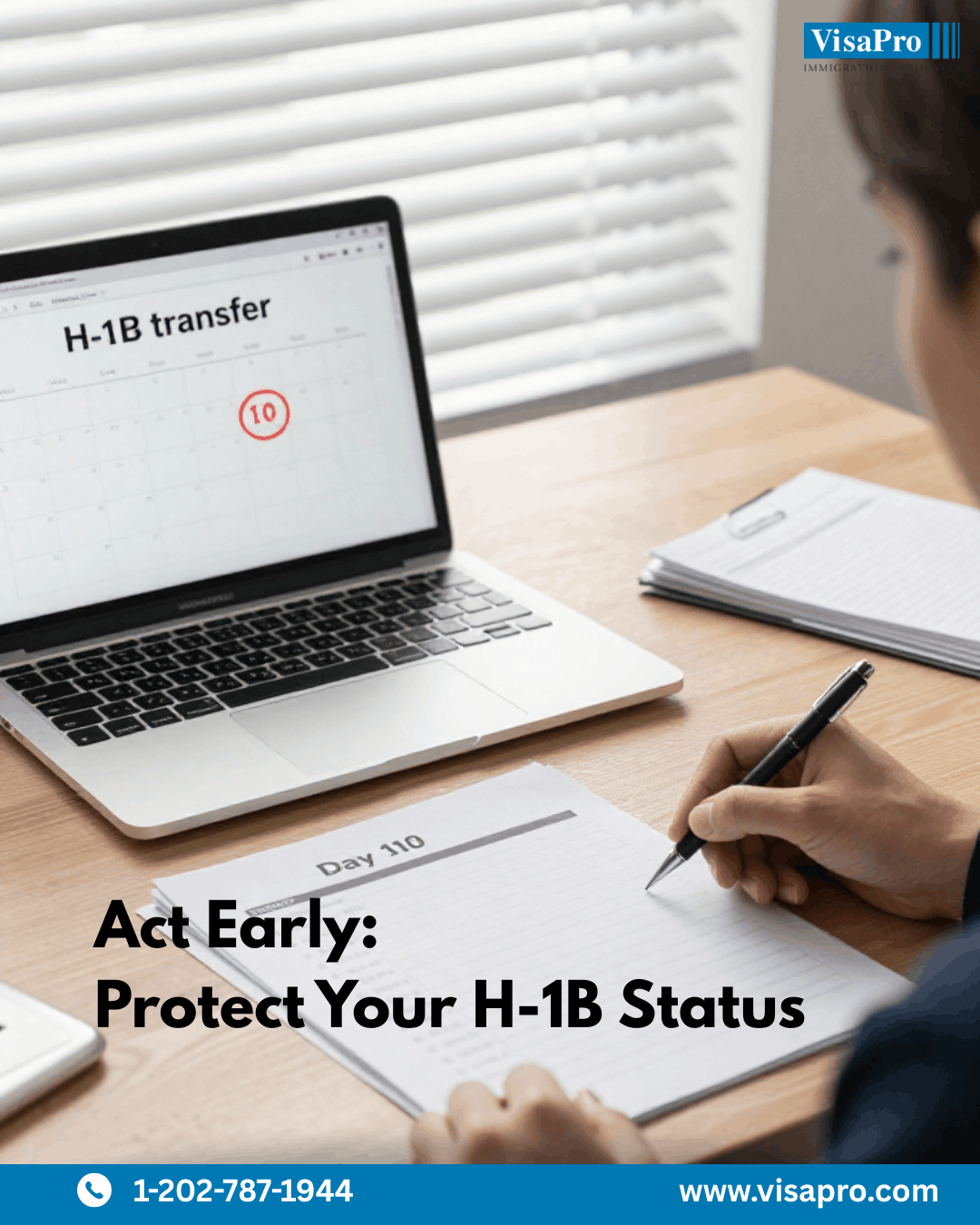
An H-1B transfer filed on Day 10 gives flexibility. Filed on Day 55, it invites risk. Filed after Day 60, it may be impossible without travel.
VisaPro Tip: Early legal planning creates options; late planning forces damage control.
Why Professional Legal Guidance Matters More Than Ever
Because severance-related misunderstandings are a leading cause of accidental status violations, professional guidance can prevent irreversible mistakes and protect long-term immigration goals.
The Stakes Are Long-Term
One miscalculation can:
- Disrupt future H-1B approvals
- Complicate green card processing
- Trigger consular scrutiny
How VisaPro Helps
VisaPro has guided thousands of professionals through complex H1B termination status scenarios, grace period calculations, emergency filings, and recovery strategies, often when time is already running out.
If you are unsure where you stand, a short legal review can make the difference between preserving your future or permanently limiting it.
Frequently Asked Questions (FAQs)
No. Severance pay does not extend, pause, or reset the H-1B 60-day grace period. The grace period begins the day after your last day of actual employment.
No. USCIS does not recognize severance pay as maintaining lawful status. Immigration status depends on active employment under an approved H-1B petition.
Your H-1B termination date is your last day of actual work, not your final paycheck date. Continued payroll or severance does not equal valid H-1B employment.
As long as a new employer files an H-1B transfer petition within the 60-day grace period, you may remain in status while the petition is pending.
You are likely out of status. Depending on the circumstances, travel-based options or corrective filings may still be possible with proper legal guidance.
No. HR guidance is not immigration advice. Always confirm immigration timelines and options with an experienced immigration attorney.
No. This phrase reflects a common misunderstanding. Severance pay does not provide grace period protection, even though many employees believe it does.
Reviewed By Immigration Attorney
Ancy S. Varghese is a U.S. immigration attorney with 19 years of experience at VisaPro Immigration Law Firm, specializing in business and employment-based immigration. She has extensive expertise guiding H-1B workers through complex termination and layoff scenarios, including H-1B grace period calculations, severance pay misconceptions, 60-day status compliance, and corrective filings. Ancy regularly advises professionals on how to avoid accidental status violations, properly time H-1B transfers or change-of-status filings, and protect long-term immigration goals when faced with layoffs, payroll confusion, or imminent out-of-status risk.
If you are receiving severance pay and assuming your status is safe, pause. The law is clear, even if the situation feels unfair. VisaPro’s experienced immigration attorneys can review your timeline, identify risks, and help you protect what you have worked so hard to build. A timely conversation today can prevent irreversible consequences tomorrow.
Need help determining whether your severance situation has already triggered the H1B 60 day grace period, or whether you still have time to file an H-1B transfer, change status, or corrective strategy without risking future denials?
VisaPro has successfully guided professionals through the most complex H1B layoff grace period, severance pay visa status, and H1B termination status cases, rescued late-discovered violations, structured lawful exits and reentries, and defended approvals against USCIS scrutiny. Schedule your free visa assessment today and get clarity before time limits close your options.
What VisaPro Customers Are Saying
The US [B-1] Visa has always been a tough ride, and being denied a few times it makes it even worse. But thanks to VisaPro and their meticulous processing I was granted a Visa. I would like to thank you and all the people involved in making this a success. I would like to recommend VisaPro to all those who seek peace of mind and hassle free Visa processing.”
 Manas Bhat, Director Operations, First Houston Mortgage India