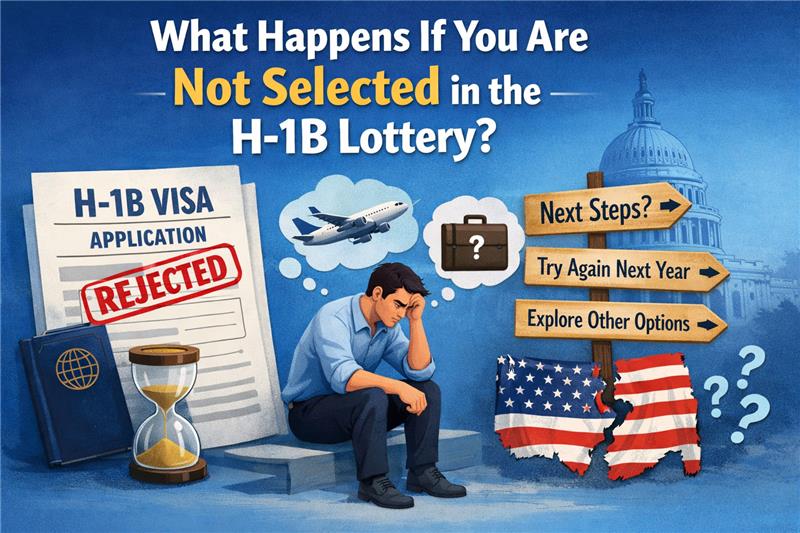
The H-1B lottery not selected alternatives question comes up every year for thousands of applicants. If your registration was not selected, it simply means USCIS did not pick your case in the annual cap lottery. It does not mean you have no options to stay or work in the United States.
When the H-1B lottery results are released, employers check their registration status in the USCIS portal. If it shows “Not Selected,” no petition (Form I-129) can be filed under the cap for that year.
Under the Immigration and Nationality Act, the annual cap is 65,000 regular slots plus 20,000 for U.S. master’s degree holders. Demand exceeds supply every year.
Here’s what many applicants misunderstand:
- You are not denied a visa
- You are simply not chosen in the random selection process
- You can still explore other visa categories immediately
In our practice, one common issue we see is applicants waiting too long after results. By the time they act, their F-1 status or OPT is close to expiring, which limits options.
This article is for general informational purposes only and does not constitute legal advice. Immigration law is fact-specific and your situation may be different. Consult a licensed immigration attorney for advice on your case.
Immediate Steps to Take After H-1B Rejection
Timing matters more than the visa itself. Here’s what you should do right away:
1. Check Your Current Status
If you are on F-1 OPT, confirm your EAD validity and whether you qualify for a STEM extension.
2. Calculate Your Grace Period
Most F-1 students get a 60-day grace period after OPT ends. This is critical for planning your next move.
3. Talk to Your Employer
Some employers are open to:
- Transferring you abroad for L-1 eligibility
- Filing a cap-exempt H-1B
- Supporting an O-1 petition
4. Evaluate Backup Visa Options Immediately
Don’t wait until your status expires. Some visas take months to prepare.
5. Consider Reapplying Next Year
You can enter the lottery again, but you should not rely on it as your only plan.
Read more about 5 Must-Do Steps After an Oracle Layoff for H-1B Visa Holders
Timeline Strategy: How to Stay in Status Legally
Maintaining legal status depends on understanding deadlines and acting before they expire. Most issues arise not from lack of options, but from delayed action.
Key timelines to track:
1. OPT End Date
If you are on F-1 OPT, your work authorization ends on the date listed on your EAD card. Any extension or status change must be filed before this date.
2. 60-Day Grace Period
After OPT ends, F-1 students typically receive a 60-day grace period. During this time, you may:
Apply for a change of status
- Transfer to another academic program
- Prepare to depart the U.S.
- Employment is not allowed during this period.
3. Change of Status Filing Window
To remain in the U.S., a change of status (for example, to O-1 or another category) must be filed before the grace period ends. Filing after expiration can lead to unlawful presence.
4. STEM OPT Application Deadline
STEM OPT must be filed before the initial OPT expires. Late filing is not accepted, even if eligibility requirements are otherwise met.
How timing affects your options?
- Filing early provides more flexibility, especially for visas that require extensive documentation
- Delays can limit choices to short-term or less suitable options
- Gaps between statuses can create complications in future visa applications
Even short periods without valid status may be recorded and reviewed in later filings.
Common Mistakes That Can Lead to Status Violations
Certain patterns appear frequently in cases involving status issues. Most are preventable with proper timing and documentation.
1. Waiting Too Long After Lottery Results
Delaying decisions after H-1B results reduces available options. Some visa categories require weeks or months to prepare, and late action can result in missed deadlines.
2. Assuming Employer Handles Everything
Employers may sponsor petitions, but status maintenance is ultimately the individual’s responsibility. Missing a filing deadline or requirement can affect legal status regardless of employer involvement.
3. Missing OPT or STEM OPT Deadlines
Failure to file before OPT expiration results in:
- Loss of work authorization
- Ineligibility for STEM extension
- Limited options to remain in the U.S.
- Deadlines are strict and not flexible.
4. Working Without Authorization
Continuing to work after OPT expires or outside authorized conditions can lead to:
- Status violations
- Future visa complications
- Potential denial of change of status applications
5. Relying Only on Next Year’s Lottery
Entering the H-1B lottery again is an option, but relying on it without a backup plan creates risk. Selection is not guaranteed, and status must still be maintained in the meantime.
6. Incorrect Assumptions About Grace Period
The 60-day grace period:
- Does not allow employment
- Does not extend visa status
- Cannot be reset or extended
Misunderstanding its purpose can lead to unintended violations.
Frequently Asked Questions
It indicates that the registration was not picked in the selection process managed by USCIS for that fiscal year. It only affects eligibility to file under the H-1B cap for that cycle and does not automatically determine other immigration options.
Depending on individual circumstances, possible pathways may include categories such as O-1, L-1, cap-exempt H-1B, F-1 STEM OPT extension, or other employment-based visa classifications. Eligibility depends on factors like education, employer structure, and current immigration status.
Continued stay is generally linked to maintaining a valid underlying status such as F-1 OPT, STEM OPT, or another authorized classification. The conditions and duration of stay vary based on the specific visa category in place.
OPT and STEM OPT timelines are governed by fixed employment authorization dates. In many cases, any transition to another visa category needs to be planned before expiration of the current authorization to avoid gaps in status eligibility.
The O-1 classification is evaluated under criteria defined in 8 CFR 214.2(o) and may involve demonstrating recognition in a specific field. It is assessed based on documentation such as achievements, contributions, or industry recognition rather than a fixed checklist outcome.
Certain employers, including qualifying universities and nonprofit research institutions, may file H-1B petitions that are not subject to the annual lottery system under USCIS regulations. Eligibility depends on both employer type and job role.
A change of status may be possible if the individual maintains valid immigration status at the time of filing. The outcome and timing depend on the specific visa category and supporting documentation requirements.
Delays can reduce available options if visa or employment authorization timelines expire. Immigration status is generally tied to strict deadlines, and gaps may limit eligibility for certain future filings.
Future participation in the H-1B lottery may be possible if eligibility criteria continue to be met and a sponsoring employer submits a new registration during the applicable filing period.
Visa eligibility is determined by multiple factors including education level, job role, employer category, and current immigration classification. Each pathway is governed by separate regulatory requirements under U.S. immigration law and USCIS guidelines.
Speak With VisaPro About Your Next Immigration Step
H-1B lottery results can narrow options for that specific filing year, but they do not determine your overall immigration pathway. Different visa categories may still be available depending on your qualifications, current status, and employer structure.
Choosing the right direction often depends on timing, documentation, and eligibility under U.S. immigration rules. A delay or incorrect filing approach can limit future possibilities or create avoidable status issues.
VisaPro can review your profile, current visa status, and employment situation to help identify potential alternatives such as O-1, L-1, cap-exempt H-1B, or other applicable pathways based on your case.
Get your case evaluated with VisaPro to understand which options may still be available for your situation and what steps come next.