The F-1 visa allows international students to study full-time at accredited U.S. schools. New data from the U.S. Department of State shows that F-1 visas issued to Indian students dropped about 69% during the peak months before the fall semester, compared with the same period the previous year.
Key Takeaways
- U.S. F-1 visas issued to Indian students dropped about 69% during the peak June–July period, which is normally the busiest time before the fall semester.
- The decline is based on two peak months of visa issuance, so it does not necessarily represent the final annual total for student visas.
- Possible reasons include limited visa interview appointments, administrative processing delays, increased scrutiny during interviews, and refusals under Section 214(b) of the Immigration and Nationality Act.
- Student visa applicants must prove they intend to return to their home country after completing their studies. Weak evidence of ties or unclear study plans can lead to refusals.
- Students must obtain admission from a SEVP-certified school, receive Form I-20, pay the SEVIS fee, submit Form DS-160, and attend a visa interview at a U.S. embassy or consulate.
- Students from India represent one of the largest international student populations, contributing significantly to research programs and the U.S. education economy.
- Visa numbers often fluctuate due to interview capacity, application timing, and global demand for U.S. education.
- Strong financial documentation, clear academic goals, and confident interview responses can significantly improve F-1 visa approval opportunities.
This article is for general informational purposes only and does not constitute legal advice. Immigration law is fact-specific, and your situation may be different. Consult a licensed immigration attorney for advice on your case.
What Is an F-1 Visa and How Does the Student Visa Process Works?
The F-1 visa is the primary nonimmigrant visa for students who want to study in the United States at universities, colleges, and language programs.
Under 8 CFR 214.2(f) and related regulations, students must meet several requirements before a visa can be issued.
The basic process usually includes the following steps:
- Admission to a U.S. school: The student must first be accepted by a school certified by the Student and Exchange Visitor Program (SEVP).
- Issuance of Form I-20: The school creates a Form I-20 in the SEVIS system (Student and Exchange Visitor Information System). This document confirms the student’s admission and program details.
- SEVIS fee payment: Students pay the SEVIS I-901 fee, which funds the tracking system managed by the Department of Homeland Security.
- Visa application (Form DS-160): The student submits the DS-160 online visa application through the U.S. Department of State.
- Consular interview: Most applicants must attend an interview at a U.S. embassy or consulate.
- Visa decision by a consular officer: One thing that surprises many of our clients is that approval does not depend only on admission to a university. Consular officers must apply U.S. immigration law when deciding whether to issue the visa.
The 69% Drop in F-1 Visas: What the Numbers Show
According to visa issuance statistics from the U.S. Department of State Bureau of Consular Affairs, the number of F-1 visas issued to Indian students during June and July, the peak months for fall semester processing, fell significantly compared with the same months the previous year.
A simplified comparison illustrates the reported decline.
| Year | F-1 Visas Issued to Indian Students (June–July) |
|---|---|
| Previous Year | ~41,000 |
| Recent Data | ~12,700 |
These months are critical because most students must obtain visas between May and August to arrive for fall classes.
However, visa statistics can fluctuate throughout the fiscal year. A drop for two months does not always mean the annual total will remain low.
In our practice, we have seen similar patterns in past years when visa interview slots opened later than usual or when applications shifted into later months.
Why Did F-1 Visas for Indian Students Drop?
Several factors may contribute to sudden changes in the number of visas issued.
1.Visa Appointment Availability
Visa issuance depends heavily on interview scheduling capacity at U.S. embassies and consulates.
When appointment slots are limited, fewer visas may be issued during certain months. Applicants sometimes schedule interviews later, which shifts approvals to later periods.
2.Consular Processing and Security Screening
Consular officers must follow guidance from the Foreign Affairs Manual (9 FAM) and U.S. immigration law.
Some applications require administrative processing, which can delay visa issuance beyond the month of the interview.
3.Refusals Under Section 214(b)
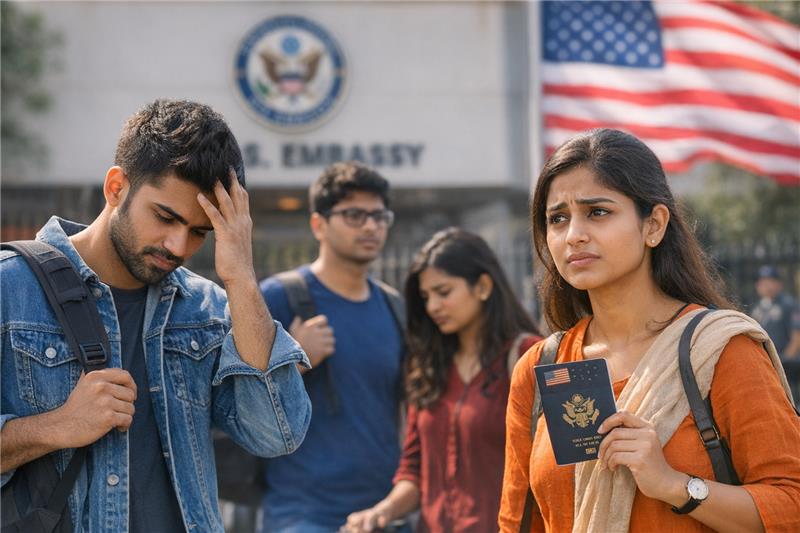
One of the most common reasons for F-1 visa denial is Section 214(b) of the Immigration and Nationality Act (INA).
Under this rule, every non-immigrant visa applicant is presumed to be an immigrant unless they prove otherwise.
Students must demonstrate:
- strong ties to their home country
- a clear study plan
- sufficient financial support
- The intent to return home after completing their studies
A common issue we encounter is that applicants focus heavily on the university admission letter but provide limited evidence about their post-study plans and home-country ties.
4.Application Timing
Another explanation is application timing. Students sometimes apply earlier or later depending on university deadlines, visa appointment availability, or travel planning.
5.Changes in Student Demand
The number of students applying to study in the United States can fluctuate based on:
- global economic conditions
- visa policy perception
- competition from other study destinations
Understanding Section 214(b) and F-1 Visa Refusals
Section 214(b) of the Immigration and Nationality Act is central to most student visa decisions.
The law requires the applicant to show they intend to stay in the United States temporarily.
Consular officers typically evaluate several factors:
- educational background
- career plans
- family ties
- financial support
- Previous travel history
In our practice, we have seen refusals issued when students could not clearly explain why a specific program in the United States fits their long-term career plans.
One example involved a student admitted to a business program who struggled to explain how the degree related to their previous academic field.
After strengthening the explanation and documentation, the student later obtained the visa on reapplication. Refusals under 214(b) are not permanent bans. Applicants may reapply if they can provide stronger evidence.
Why International Students Matter to U.S. Universities?
International students play a significant role in the U.S. education system. According to data from the Institute of International Education Open Doors report, international students contribute tens of billions of dollars annually to the U.S. economy through tuition, housing, and living expenses.
Indian students have become a major part of this population. In recent years, they have represented one of the largest international student groups in the United States.
Universities rely on these students for several reasons:
- enrollment in STEM programs
- graduate research contributions
- financial support through tuition revenue
Because of this, sudden changes in visa numbers often attract attention from universities and policymakers.
Will F-1 Visa Numbers Recover?
Predicting future visa issuance trends is difficult because many variables affect the numbers. However, several factors suggest the overall demand for U.S. education remains strong:
- High international demand for U.S. universities
- Optional Practical Training (OPT) work opportunities
- Pathways to employment visas, such as H-1B
In many cases, short-term declines are followed by rebounds once interview capacity increases or processing backlogs clear. A common issue we encounter is that students interpret temporary statistics as permanent policy changes. In reality, visa numbers often fluctuate year to year.
What Students Should Focus on When Applying for an F-1 Visa?
For students planning to apply, the most important factors remain the fundamentals of the visa application.
Key preparation steps include:
- Understanding the academic program clearly
- preparing strong financial documentation
- explaining long-term career plans
- practicing interview responses
One thing that surprises many of our clients is how much weight consular officers place on clarity and credibility during the interview.
Frequently Asked Questions
The reported decline refers to visas issued during the peak summer processing months. Factors such as appointment availability, processing delays, and refusal decisions under immigration law can affect these numbers.
Approval standards have not fundamentally changed, but applicants must meet requirements under Section 214(b). Strong documentation and clear study plans remain critical.
India has become one of the largest sources of international students in the U.S., with hundreds of thousands enrolled across universities and colleges.
Common documents include Form I-20, DS-160 confirmation, SEVIS fee receipt, passport, financial documents, and academic records.
Yes. A refusal under INA Section 214(b) does not prevent future applications. Applicants must address the concerns that led to the previous refusal.
The timeline depends on university admission, visa appointment availability, and processing times at the U.S. embassy or consulate.