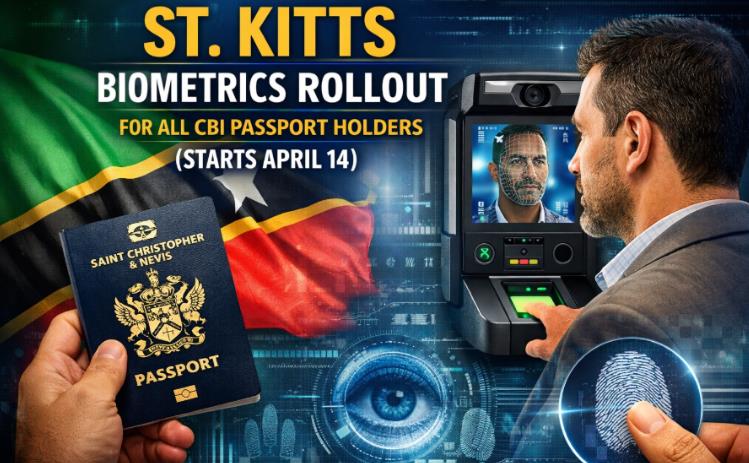
Starting April 14, St Kitts requires biometric enrollment for all CBI passport holders. This includes fingerprints and facial recognition data. The goal is to strengthen identity verification and meet international compliance standards. If you do not comply, you may face delays in passport renewal, travel restrictions, or increased scrutiny.
This means both new applicants and existing citizens must submit biometric data as part of updated identity verification rules. The change is tied to international pressure on Caribbean CBI programs and directly affects passport validity, renewals, and future travel.
Key Takeaways
- St Kitts requires biometrics for all CBI passport holders starting April 14, 2026.
- The rule likely applies to both new applicants and existing citizens.
- Biometrics include fingerprints and facial recognition data.
- Non-compliance can delay passport renewal and affect travel.
- The rollout is driven by EU and global compliance pressure.
- Enrollment may require visiting embassies or biometric centers.
- The change signals stricter long-term monitoring of CBI citizens.
This article is for general informational purposes only and does not constitute legal advice. Immigration law is fact-specific and your situation may be different. Consult a licensed immigration attorney for advice on your case.
Who Must Submit Biometrics Under the New St Kitts Rule?
The requirement applies broadly. Based on how similar compliance measures are structured, here’s what we expect:
- Existing CBI citizens: Yes, you are included. This is not limited to new applicants.
- New applicants: Biometrics will likely become part of the standard application process.
- Dependents: Spouses and adult dependents must comply.
- Minors: In most programs, children above a certain age (often 5 or 12) may need biometric data.
Governments rarely introduce biometric systems only for new applicants. They apply them retroactively to maintain credibility with international partners. Holding a valid passport does not exempt you from new compliance rules. Governments can impose additional identity verification at any time.
Why St Kitts Is Introducing Biometrics Now?
This change didn’t happen in isolation. Over the past few years, Caribbean CBI programs have faced growing pressure from international bodies, especially the European Union.
Weak identity verification can create security risks and undermine visa-free agreements. Visa-free access is the backbone of these programs. If partner countries lose confidence, that access can disappear.
When due diligence concerns increase, governments respond by tightening controls. Biometrics is one of the most effective tools for that.
Expect this to align with:
- Stronger background screening
- Enhanced due diligence checks
- More data-sharing agreements between countries
When the Biometrics Requirement Starts and Key Deadlines?
The official rollout begins on April 14, 2026.
What is less clear right now is the full enforcement timeline. In most cases, governments use phased implementation:
- Immediate requirement for new applicants
- Gradual rollout for existing passport holders
- Hard enforcement tied to passport renewal or travel
Here’s what we typically advise clients: don’t wait for the final deadline. Once a compliance system is active, delays can create complications, especially if you need to renew your passport or travel urgently.
How the Biometric Enrollment Process Works (Step-by-Step)
While final procedures may vary, the process usually follows a predictable structure:
Step 1: Notification
You may receive direct instructions from the CBI unit or your authorized agent.
Step 2: Appointment Booking
You will likely need to schedule a biometric appointment.
Step 3: Location
This could happen at:
- An embassy or consulate
- An authorized biometric center
- A designated international location
Step 4: Data Collection
Typically includes:
- Fingerprints
- Facial recognition scan
- Possibly digital signature
Step 5: Processing
Your data is verified and linked to your passport record.
In our experience, delays often happen at the appointment stage. Limited slots and geographic constraints can slow things down.
Do You Need to Travel for Biometrics?
This depends on how the system is implemented.
There are usually three scenarios:
- Local collection centers available in major regions
- Embassy-based enrollment common for overseas citizens
- Travel required if no nearby facility exists
A common issue we encounter is assumption. Many passport holders expect remote options, but governments often require in-person verification for security reasons. If you live outside major cities, plan ahead. Travel may be necessary.
What Happens If You Don’t Comply?
This is where things get serious.
Failure to submit biometrics can lead to:
- Passport renewal delays
- Administrative holds on your file
- Increased scrutiny during travel
- Potential suspension of passport validity
Here’s what most people don’t realize: governments don’t always cancel passports immediately. Instead, they restrict functionality.
For example:
- You may not be able to renew
- Your passport may trigger alerts during border checks
- Additional verification may be required before travel
In more serious cases, prolonged non-compliance can raise red flags during due diligence reviews.
How This Affects Your Passport and Visa-Free Travel?
Your passport’s strength depends on international trust.
If compliance measures like biometrics are not followed, it can affect:
- Entry into visa-free countries
- Airline boarding decisions
- Border inspection outcomes
We’ve seen situations where even minor discrepancies lead to secondary screening. Biometrics is designed to reduce those risks, but only if your data is properly registered. This is not just about St Kitts. It’s about how other countries view the reliability of its passport system.
Data Privacy and Security: What Happens to Your Biometrics
Biometric data raises valid concerns.
Typically, governments store this information in secure databases linked to passport systems. Access is restricted, but the level of transparency varies.
You should assume:
- Data will be retained long-term
- It may be shared with partner agencies under agreements
- Security protocols depend on government infrastructure
A balanced view is important here. Biometrics improves security, but it also increases the amount of personal data held by authorities.
Frequently Asked Questions
Yes. Based on how compliance reforms are typically implemented, existing passport holders are expected to submit biometric data, not just new applicants.
The rollout begins April 14, 2026. Specific deadlines may vary depending on implementation phases, but early compliance is strongly recommended.
In most cases, yes. Biometrics are usually collected through embassies or authorized centers abroad, though availability depends on your location.
Not immediately. However, you may face renewal issues, travel restrictions, or administrative holds if you delay compliance.
The appointment itself is quick, often under 30 minutes. Processing timelines vary depending on system capacity and demand.
Yes. Stronger identity verification helps maintain visa-free agreements. Non-compliance can indirectly affect travel reliability.