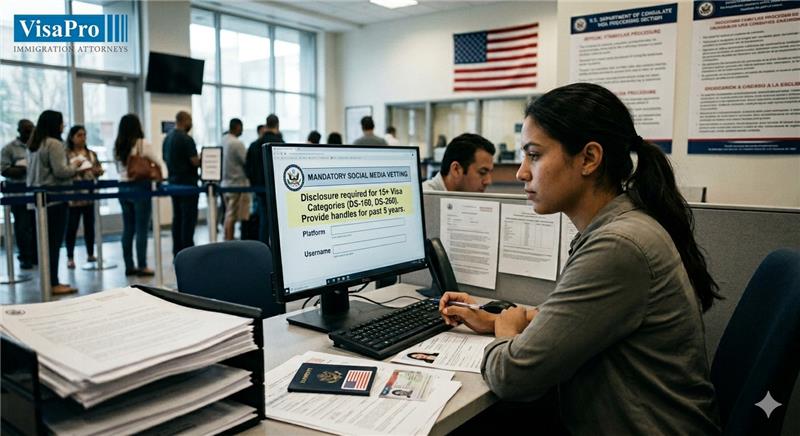
The United States has expanded social media vetting across more than 15 visa categories as part of its immigration screening process effective March 30. This means visa applicants are now more likely to have their online activity reviewed by consular officers during background checks.
The review focuses on publicly available content and information disclosed through the DS-160 visa application form, and it applies to both nonimmigrant and immigrant visa categories.
The change is tied to ongoing security screening practices implemented by agencies such as U.S. Department of State and U.S. Citizenship and Immigration Services in coordination with other federal bodies. Applicants should expect their digital presence to play a role in visa evaluation, especially when inconsistencies or undisclosed information appear.
Key Takeaways
- Social media vetting is now part of the visa screening process across multiple categories effective March 30
- Applicants must disclose social media identifiers on the DS-160 form accurately
- Consular officers review publicly available information as part of background checks
- Inconsistencies between application data and online profiles can trigger additional scrutiny
- The process is conducted by the U.S. Department of State in coordination with other agencies
- Visa categories affected include work, student, exchange, and visitor visas
- Social media alone does not determine outcomes but contributes to overall eligibility assessment
- Preparation and consistency across documents and online presence can reduce complications
This article is for general informational purposes only and does not constitute legal advice. Immigration law is fact-specific and your situation may be different. Consult a licensed immigration attorney for advice on your case.
What Is US Social Media Visa Vetting?
US social media visa vetting is a component of the broader visa background check process where authorities review an applicant’s digital footprint. This includes publicly available posts, profiles, and any social media identifiers provided in the visa application.
The purpose is to verify identity, detect inconsistencies, and assess potential security or admissibility concerns. Consular officers rely on information submitted through the DS-160 form along with other databases and interagency checks.
The process is not limited to a single platform and may include widely used networks such as Facebook, LinkedIn, Instagram, and X (Twitter). The scope of review depends on what is publicly accessible and what the applicant discloses.
From a procedural standpoint, social media vetting is not a standalone step. It is integrated into the overall visa adjudication process conducted by the Department of State. Officers use it alongside interviews, documentation review, and background checks to form a final decision.
How Social Media Screening Works?
Social media screening typically begins after the applicant submits the DS-160 form. Consular officers may review the social media identifiers listed and cross-check them against publicly available profiles.
The review focuses on consistency between application data and online activity. In some cases, additional scrutiny may occur if discrepancies appear in employment history, education, travel patterns, or stated intent.
The review is conducted within the framework of immigration law and internal screening policies rather than arbitrary inspection.
Which Visa Categories Are Affected?
The expanded vetting applies to a broad range of visa categories, including both nonimmigrant and immigrant classifications. While exact coverage may vary by post and applicant profile, the following categories are commonly impacted:
- Work visas such as H-1B and L-1
- Student visas such as F-1 and M-1
- Exchange visitor visas such as J-1
- Tourist and business visas such as B1/B2
- Certain immigrant visa categories processed through consulates
These categories fall under the jurisdiction of U.S. Department of State during consular processing. The expansion reflects a broader application of existing screening tools rather than a completely new framework.
In practice, most visa applicants who undergo consular interviews may be subject to some level of digital footprint review, especially if their case requires additional administrative processing.
What Information Is Reviewed During Social Media Vetting?
Social media vetting focuses on publicly accessible information and disclosed identifiers. Officers may review:
- Profile details and bios
- Public posts and comments
- Connections or associations
- Activity patterns and engagement
- Consistency with application data
The goal is not to monitor private communications but to assess publicly visible information that may raise concerns about identity or intent. Applicants are evaluated based on the totality of their application rather than social media alone.
Public vs Private Accounts
Private accounts are generally not directly accessible unless information is publicly visible or disclosed through other means. However, applicants should not assume that private settings eliminate review entirely. If inconsistencies arise between disclosed information and publicly accessible data, it may trigger further checks.
DS-160 Social Media Disclosure Requirements
The DS-160 form requires applicants to list their social media identifiers used over a specified period. This includes usernames or handles associated with platforms used in recent years.
Accurate disclosure is important because consular officers may compare submitted information with publicly available profiles. The form is part of the official visa application process administered by the U.S. Department of State.
What Happens If You Omit or Misreport Accounts
Failure to disclose social media accounts or providing incorrect information can lead to complications. These may include delays, additional administrative processing, or visa denial in certain cases. Inconsistencies are often viewed as credibility concerns during adjudication.
Applicants are expected to ensure that all information provided in the DS-160 is complete and accurate before submission.
Why the US Expanded Social Media Vetting
The expansion of social media vetting is linked to broader security and verification objectives. Agencies such as the Department of Homeland Security and the Department of State use screening tools to support identity verification and fraud prevention.
Under immigration law, visa issuance requires admissibility determinations based on several factors outlined in the Immigration and Nationality Act. Social media review acts as an additional layer of verification to complement existing background checks.
The approach reflects increased reliance on digital signals as part of modern identity and risk assessment practices used in consular processing.
How Social Media Affects Visa Approval Decisions
Social media activity can influence visa decisions when it highlights inconsistencies, misrepresentation, or content that raises admissibility concerns. Consular officers evaluate applications holistically, meaning social media is one of several elements considered.
If an applicant’s online presence conflicts with their stated purpose of travel, employment history, or personal information, it may lead to further questioning or administrative processing. In some cases, it may contribute to a refusal if combined with other negative factors.
Common Red Flags in Social Media Profiles
- Conflicting employment or education details
- Content inconsistent with visa category intent
- Public posts suggesting misrepresentation
- Multiple identities or unclear profile ownership
- Activity that contradicts application statements
These factors do not automatically result in denial but may prompt additional scrutiny.
What Applicants Should Do Before Applying
Applicants can reduce risks by preparing their applications carefully:
- Review all social media profiles for consistency with application data
- Ensure DS-160 information matches publicly visible details
- Remove or clarify outdated or conflicting information where appropriate
- Avoid misrepresentation in both online profiles and application forms
- Maintain consistency in employment, education, and travel history
In our experience, many delays occur due to mismatches between application data and online presence rather than social media content itself. Aligning both reduces the likelihood of additional scrutiny.
Step-by-Step Process of Social Media Vetting
The social media vetting process typically follows these stages:
- Application Submission: The applicant completes the DS-160 form and submits social media identifiers.
- Initial Screening: Application data is reviewed alongside background check systems.
- Profile Review: Consular officers assess publicly available social media information if needed.
- Interview Evaluation: Information from the interview is compared with application and online data.
- Additional Review (if required): Cases may undergo administrative processing for further checks.
- Final Decision: A visa is issued or denied based on overall eligibility and admissibility.
This process is conducted within the consular framework of the U.S. Department of State and supported by interagency coordination where applicable.
Frequently Asked Questions
It is a screening process where consular officers review publicly available online activity and disclosed social media identifiers as part of visa background checks. The goal is to verify identity and assess admissibility.
Multiple categories are affected, including work visas like H-1B, student visas like F-1, exchange visas like J-1, and visitor visas such as B1/B2. Both immigrant and nonimmigrant visas may be subject to review.
Private accounts are not directly accessible through standard review. However, publicly visible information and disclosed identifiers may still be evaluated during the process by agencies including U.S. Citizenship and Immigration Services.
Failure to disclose required information can lead to delays, additional review, or visa denial. Accuracy is important because inconsistencies may raise credibility concerns.
Yes, if the content reveals inconsistencies, misrepresentation, or concerns related to eligibility or intent. Social media is considered alongside other application factors.
Common platforms include Facebook, LinkedIn, Instagram, and X (Twitter), depending on what the applicant discloses and what is publicly accessible.
Applicants should ensure consistency between their DS-160 form and online profiles, review public content for accuracy, and avoid discrepancies in employment, education, or identity information.