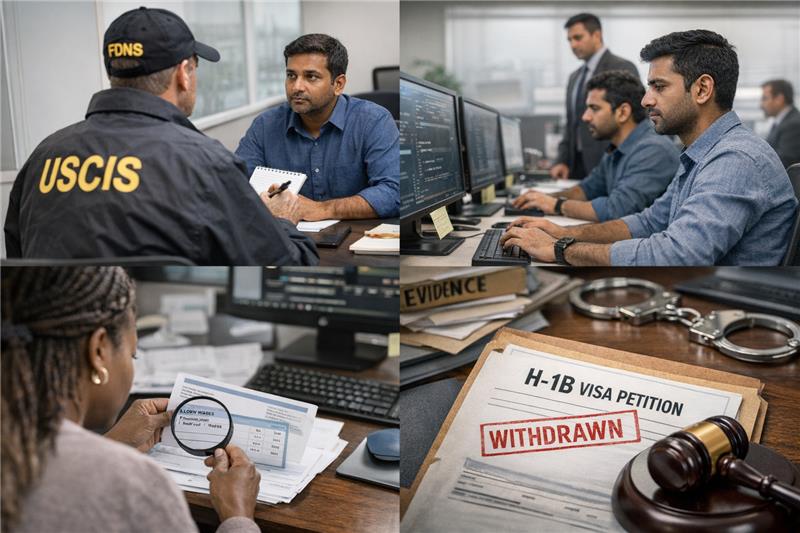
USCIS can still investigate an H-1B petition even after it has been withdrawn. A recent decision confirms that withdrawal does not remove liability if fraud or misrepresentation is suspected.
This matters because many employers assume that pulling a petition closes the case. It does not. If USCIS believes there was false information, the investigation can continue and lead to penalties.
Quick Answer
- Can USCIS investigate a withdrawn H-1B petition? Yes
- Why? Fraud jurisdiction remains even after withdrawal
- Who is at risk? Primarily, employers, but employees can also be affected
- Possible outcomes? Revocation, penalties, and future visa impact
This article is for general informational purposes only and does not constitute legal advice. Immigration laws change frequently. You should consult a qualified immigration attorney for advice specific to your situation.
What the New USCIS Decision Means
The recent ruling makes one point very clear. Withdrawal is not a reset button. Many employers withdraw petitions to fix errors or avoid scrutiny. That approach no longer works the way people expect it.
If USCIS has identified concerns, it can review petitions for fraud or misrepresentation even after the filing is no longer active. The legal basis comes from federal regulations.
Here’s the practical takeaway: If incorrect or misleading information was submitted, withdrawal does not erase that record. USCIS can still act on it.
Why Withdrawal Does Not Stop an Investigation?
This is where most confusion happens.
USCIS separates two things:
- The petition itself
- The conduct behind the petition
Even if the petition is withdrawn, the conduct remains reviewable.
What most people don’t realize is that fraud falls under a different category than simple denial. Fraud involves material misrepresentation, meaning the information submitted could have influenced approval.
Under USCIS policy guidance:
- Fraud triggers review by Fraud Detection and National Security (FDNS)
- Cases can be flagged before or after withdrawal
- Investigations can continue independently
We have seen cases where an employer withdrew after receiving an RFE. Months later, USCIS still issued further notices based on earlier discrepancies.
How USCIS Detects H-1B Fraud
USCIS does not rely on one signal. Investigations usually come from patterns.
Here are the most common triggers:
- Site Visits: FDNS officers visit office locations listed in the petition. If the employee is not present or the business setup does not match filings, the case gets flagged.
- Payroll Mismatches: Salary listed in the Labor Condition Application (LCA) must match actual pay. Differences raise immediate concern.
- Third-Party Placement Issues: Many H-1B roles involve client sites. If contracts or supervision details are unclear, USCIS questions the legitimacy of the job.
- Inconsistent Documentation: Different job descriptions across filings can signal misrepresentation. In our practice, one case involved a company listing a software role but providing marketing duties during a site visit. That alone triggered a deeper review.
What Happens After an Investigation Starts
Once a case is flagged, USCIS does not move randomly. There is a defined internal process, and each step builds the previous one. Here’s a clearer breakdown with a bit more detail, so you understand what actually happens behind the scenes.
Step-by-Step Process
1.Case Flagged
A case can be flagged in several ways:
- A weak or inconsistent RFE response
- A failed or suspicious site visit
- Data mismatches found during internal USCIS review systems
- Tips or referrals from other agencies like the Department of Labor
Once flagged, the case is usually routed to the Fraud Detection and National Security (FDNS) unit.
2.Internal Review (FDNS Investigation)
FDNS officers take a deeper look at:
- Employer’s past H-1B filings
- Job role consistency across documents
- Worksite and client details
- Payroll and LCA compliance
In many cases, they compare multiple petitions from the same employer to identify patterns. This is where small inconsistencies can turn into bigger concerns.
3.Notice Issued (Formal USCIS Action)
If concerns are confirmed, USCIS sends an official notice:
- RFE (Request for Evidence):
Used when more documents are needed. This is still a chance to clarify issues. - NOIR (Notice of Intent to Revoke):
More serious. It means USCIS already sees strong problems and is considering revocation.
Deadlines are strict. Missing or weak responses can make things worse.
4.Employer Response
This is the most critical stage.
The response must include:
- Clear documentation (contracts, payroll, project details)
- Consistent explanation of job role and location
- Evidence that matches what was originally filed
5.Final Action by USCIS
After reviewing the response, USCIS makes a decision:
- Revoke approval (if fraud or major inconsistency is found)
- Deny related or future petitions
- Maintain approval (rare, but possible with strong evidence)
- Refer the case for enforcement
6.Possible Escalation to Other Agencies
In more serious situations, cases may be shared with:
- Department of Labor (DOL) for wage violations
- Department of Justice (DOJ) for fraud-related enforcement
- Department of State (DOS) for visa revocation
This usually happens when there is a pattern of violations or a clear intent to mislead.
Risks for Employers And H-1B Employees
| Category | Employers | H-1B Employees |
|---|---|---|
| Primary Risk Level | Highest exposure in investigations | Secondary exposure, but still affected |
| Petition Impact | Petition revocation or denial of future filings | Visa tied to the petition may be revoked |
| Filing Restrictions | Increased scrutiny or limits on future H-1B filings | Difficulty securing future visa approvals |
| Financial Consequences | Fines, back wages, compliance penalties | Loss of income if the status is affected |
| Legal Exposure | Possible civil or criminal liability in serious fraud cases | Misrepresentation findings if knowingly involved |
| Immigration Impact | Damage to the employer’s credibility with USCIS | Future visa denials or inadmissibility risks |
| Status Risk | Not applicable directly | Loss of legal status in the U.S. |
| Key Trigger Factor | Inconsistent filings, wage violations, fake roles | Association with a non-compliant employer |
| Serious Escalation | Referral to agencies like DOL or DOJ | Visa bans if fraud involvement is proven |
| Important Note | Compliance failures can affect all future filings | Many employees are unaware of issues, but are still impacted |
Real Scenarios That Trigger Investigations
These situations are more common than most people think. In many cases, the issue is not one mistake. It’s a pattern that becomes visible when USCIS connects the dots across filings, payroll records, and site visits.
1.Benching Without Pay
What happens: H-1B employees approved for roles aren’t assigned work immediately and are kept on the bench, sometimes without pay.
Why it matters: Employers must pay the wage listed in the LCA from the start date, even if no work is available.
How it gets flagged: Payroll gaps, employee complaints, or site visits.
Real scenario: A consulting firm had multiple H-1B employees waiting for projects. During a site visit, one confirmed week without pay. USCIS flagged a pattern of benching violations, even after the firm withdrew some petitions.
2.Fake Job Locations
What happens: The petition lists one worksite, but the employee is actually placed elsewhere, often at a third-party client site.
Why it matters: H-1B approvals are location-specific, and the LCA must match the actual worksite.
How it gets flagged: Site visits, mismatched client locations, missing contracts.
Real scenario: An IT services company filed petitions for in-house roles, but employees worked at client offices in another state. After receiving RFEs, the company withdrew some petitions, but FDNS still pursued the case due to repeated location mismatches.
What Employers Should Do Now
Ignoring this shift is risky. Compliance needs to be proactive.
Practical Checklist
- Review all active and past H-1B filings
- Confirm job roles match actual duties
- Ensure payroll records align with LCA
- Maintain client contracts and documentation
- Prepare for unannounced site visits
In my experience, companies that run internal audits early avoid major issues later.
What H-1B Workers Should Watch For
Employees should stay alert, especially if something feels off.
Warning Signs
- No clear job assignment
- Payment delays or inconsistencies
- Employer avoids documentation requests
- Work location differs from the petition
If you notice these, it is worth getting legal advice early. Waiting often limits your options.
Frequently Asked Questions
Yes. Withdrawal does not stop fraud-related review.
No. If fraud is suspected, liability remains.
False job details, salary misrepresentation, fake work locations, or misleading documents.
Yes, but usually only if they were knowingly involved.
Site visits, inconsistent filings, payroll issues, and third-party placement concerns.
A Notice of Intent to Revoke. It signals serious concerns and requires a formal response.
There is no strict short timeline. Investigations can continue even after withdrawal.